
The rupee tumbled 3 per cent against the US dollar in 2024 as concerns over slower economic growth and a stronger greenback in global markets weighed, but it was among the least volatile currencies in the world and the headwinds may be less intense in the coming year.

From the 30-share Sensex pack, Sun Pharma, Reliance Industries, Infosys, Tata Motors, Infosys, Titan, Maruti and NTPC were among the major laggards. Mahindra & Mahindra, Tech Mahindra, HCL Technologies and IndusInd Bank were the gainers.

State Bank of India, Tech Mahindra, Larsen & Toubro, Tata Steel, Sun Pharma, Infosys, HCL Tech, Axis Bank, Tata Consultancy Services and NTPC were among the biggest laggards among Sensex shares. Nestle, Hindustan Unilever, Titan, Power Grid, UltraTech Cement and ITC were among the gainers.

Nestle, Infosys, ICICI Bank, Tata Motors, Tata Consultancy Services, HCL Technologies, Tech Mahindra and Axis Bank were the other major winners. Sun Pharma, Asian Paints, Bajaj Finance and Titan were the laggards.

Stock market investors became richer by a whopping Rs 77.66 lakh crore in 2024, helped by an overall optimistic trend in equities, where the BSE Sensex surged over 8 per cent. Analysts said the year witnessed a tug of war between the bulls and bears marked by volatility but, despite the uncertainties around the world, the Indian markets sustained the pressure and delivered impressive returns.

'Market corrections are a natural part of investing, so it's essential to remain focused on long-term financial goals.'

'By his words, actions, and body language during their joint press appearance wanted to convey his personal respect and, more broadly, his desire to work closely with India.'

Quarterly earnings from corporates, global trends, and trading activity of foreign investors will guide market sentiment this week, analysts said, adding that benchmark indices may face volatile trends. "The upcoming release of Q2 results will be closely watched, providing insights into corporate performance. "Meanwhile, the escalating tensions between Israel and Iran introduce a significant geopolitical risk, potentially leading to increased oil prices and market volatility.

'The Budget must be pro-growth, focusing on infrastructure creation while also managing the fiscal deficit.'

Global trends, trading activity of foreign investors and domestic macroeconomic data announcements would dictate terms in the equity market in a holiday-shortened week ahead, analysts said. Equity markets would remain closed on Wednesday for Gandhi Jayanti. "Looking ahead, it will be interesting to monitor Foreign Institutional Investors (FIIs) and their flow into India.

Equity benchmark indices Sensex and Nifty settled lower for the sixth straight session on Monday due to heavy selling in bellwether stocks including HDFC Bank and Reliance Industries amid mixed trends in the global markets and outflow of foreign funds. Falling for the sixth consecutive session, the BSE Sensex tumbled 638.45 points or 0.78 per cent to settle at 81,050. During the day, it plummeted 962.39 points or 1.17 per cent to 80,726.06. The NSE Nifty slumped 218.85 points or 0.87 per cent to end at 24,795.75.

Sebi's new FPI regulation has helped attract new capital pool, up registrations.

Equity benchmark Sensex declined over 215 points on Wednesday, weighed by losses in index heavyweight Reliance Industries, Bajaj Finserv and Tata Steel, after the Reserve Bank raised the key interest rate by 35 basis points. Subdued Asian markets and continued selling by foreign investors also weighed on sentiment, traders said. Extending its losses for the fourth straight session, the 30-share BSE Sensex ended 215.68 points or 0.34 per cent lower at 62,410.68.

From the Sensex pack, Tech Mahindra, HDFC Bank, Larsen & Toubro, ITC, Infosys, IndusInd Bank, Kotak Mahindra Bank, Titan and HCL Technologies were among the gainers. Maruti Suzuki India, Tata Steel, Bajaj Finance, UltraTech Cement, Nestle India, Axis Bank and Tata Consultancy Services (TCS) were among the laggards.

The Indian Institute of Foreign Trade invites applications for its MBA programme in International Business.

From the 30-share blue-chip pack, Bharti Airtel, Power Grid, Bajaj Finance, Nestle, Mahindra & Mahindra, Reliance Industries, Asian Paints, IndusInd Bank, Hindustan Unilever and HDFC Bank were the biggest gainers. Bajaj Finance climbed nearly 2 per cent after the company reported an 18 per cent increase in its consolidated net profit to Rs 4,308 crore for the December quarter.
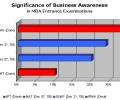
Business awareness forms a major part of many B-school entrance tests. To help test takers prepare, we publish a series of quizzes.

The benchmark BSE Sensex and Nifty closed marginally higher in a volatile trade on Tuesday as gains in FMCG, power and energy stocks helped the indices extend gains for a fifth straight day. The 30-share BSE benchmark ended 20.86 points or 0.04 per cent higher at 58,136.36 with 16 of its constituents ending in the red. During the day, it hit a high of 58,328.41 and a low of 57,744.70.

Among major Sensex gainers, Mahindra & Mahindra rose the most by 3.29 per cent. Adani Ports gained 1.26 per cent, Tata Motors by 1.14 per cent, and Axis Bank by 0.92 per cent. Nestle, NTPC, Reliance, ITC Titan, Kotak Bank, Infosys and TCS also gained. HCL Tech, Tech Mahindra, and ICICI Bank were the losers.
From the 30 blue-chip pack, Mahindra & Mahindra, IndusInd Bank, Bajaj Finance, Tata Motors, Bajaj Finserv, Nestle and ICICI Bank were the biggest gainers. State Bank of India, Tata Steel, Adani Ports, Zomato, UltraTech Cement and HCL Tech were among the laggards.

State Bank of India, Adani Ports, Tata Consultancy Services, ICICI Bank, Reliance Industries and PowerGrid were also among the laggards.

Foreign portfolio investors (FPIs) have net sold domestic shares worth over $10 billion so far this month amid a shift to China, which not only offers attractive valuations compared to India but has also announced several measures to support the economy and the stock market in recent weeks. If the trend doesn't reverse, this will be the first time that overseas funds will yank out more than $10 billion from Indian equity markets in a month.
From the Sensex pack, Reliance Industries, Bajaj Finserv, HDFC Bank, Adani Ports, Maruti Suzuki India, Axis Bank, Hindustan Unilever, Sun Pharmaceuticals and Asian Paints were among the laggards. Reliance Industries fell the most by 2.38 per cent to close at Rs 1,171.10 apiece.
From the Sensex pack, Infosys, HCL Technologies, Infosys, NTPC, Mahindra & Mahindra, Tata Consultancy Services, Nestle, Tech Mahindra and Bajaj Finance were the major gainers. Power Grid, Larsen & Toubro, Maruti, Titan, HDFC Bank, Wipro, HDFC and ITC were among the laggards.

It was government policies, not ITA-I, according to a recent study.
US-based Citigroup is likely to allocate more global roles to India than to any other centre it operates in due to the country's strong talent pool, said Jane Fraser, chief executive officer of Citigroup, on Wednesday in an interaction with CNBC-TV18. Fraser also expressed confidence that India will remain the world's fastest-growing economy.

Indian Council of Medical Research had also recommended the use of hydroxychloroquine for treating healthcare workers handling suspected or confirmed coronavirus cases and also the asymptomatic household contacts of the lab-confirmed cases.
A host of macroeconomic data announcements, the last batch of September quarter earnings, global trends, and trading activity of foreign investors will be the major driving factors for the equity market this week, according to analysts. Equity markets would remain closed on Friday for Guru Nanak Jayanti. "India is set to release CPI and IIP data on November 12, with WPI data expected on November 14.
Equity benchmark indices Sensex and Nifty settled higher on Thursday, powered by a rally in banking and power stocks amid a largely firm trend in global markets. The stock markets mostly traded range-bound in the absence of any major trigger and persistent foreign capital outflows, traders said. The 30-share BSE Sensex rose 144.31 points, or 0.18 per cent, to settle at 81,611.41.
The Indian Institute of Foreign Trade (a deemed university) invites applications for its Executive Masters in International Business programme.

The Indian equity markets have significantly increased in importance within the emerging market (EM) basket of stocks in recent years. Since 2018, India's weighting in the Morgan Stanley Capital International (MSCI) EM Index - tracked by passive funds with assets of nearly $500 billion - has doubled, while the number of domestic stocks has grown by almost 70 per cent.

'Expect India to keep doing well irrespective of geopolitics.'
Macroeconomic data announcements, trading activity of foreign investors and global trends will guide equity market movement this week, which would also mark the beginning of the new calendar year and month, analysts said.

'The bull market cycle ran for five years. It's the end of that cycle.' 'The next cycle is a down cycle, and in that down cycle, you will see the Sensex falling from their highs of around 68,000 to maybe 40,000-50,000 at the bottom of the cycle.'

Macroeconomic data announcements, the last batch of Q1 earnings and global trends are the major factors that would influence trading sentiments in the equity market in a holiday-shortened week ahead, analysts said. Besides, trading activity of foreign investors would also be a crucial factor in dictating movement in the market. Equity markets would remain closed on Thursday for Independence Day.

'Retail investors have to stick to their asset allocation plans and continuously do portfolio reviews.'
The Indian Institute of Foreign Trade, Delhi, invites applications for its MBA programme in International Business.

From the 30 Sensex firms, Tata Consultancy Services and HCL Technologies dropped over 3 per cent each. Infosys, Tech Mahindra, Sun Pharma and Tata Motors were the other major laggards. Bajaj Finance, Bajaj Finserv, Nestle, HDFC Bank, ICICI Bank and State Bank of India were among the biggest gainers.

"India's resilience (during the global financial crisis) has been recognised internationally. In my view, India may be beginning to see a multi-decade bull market," Jhunjhunwala said at a seminar organised by the Indian Institute of Foreign Trade in Mumbai.

High gold imports had contributed to high CAD which stood at 5.4 per cent in the second half of 2012-13 and was creating pressure on the rupee.
